
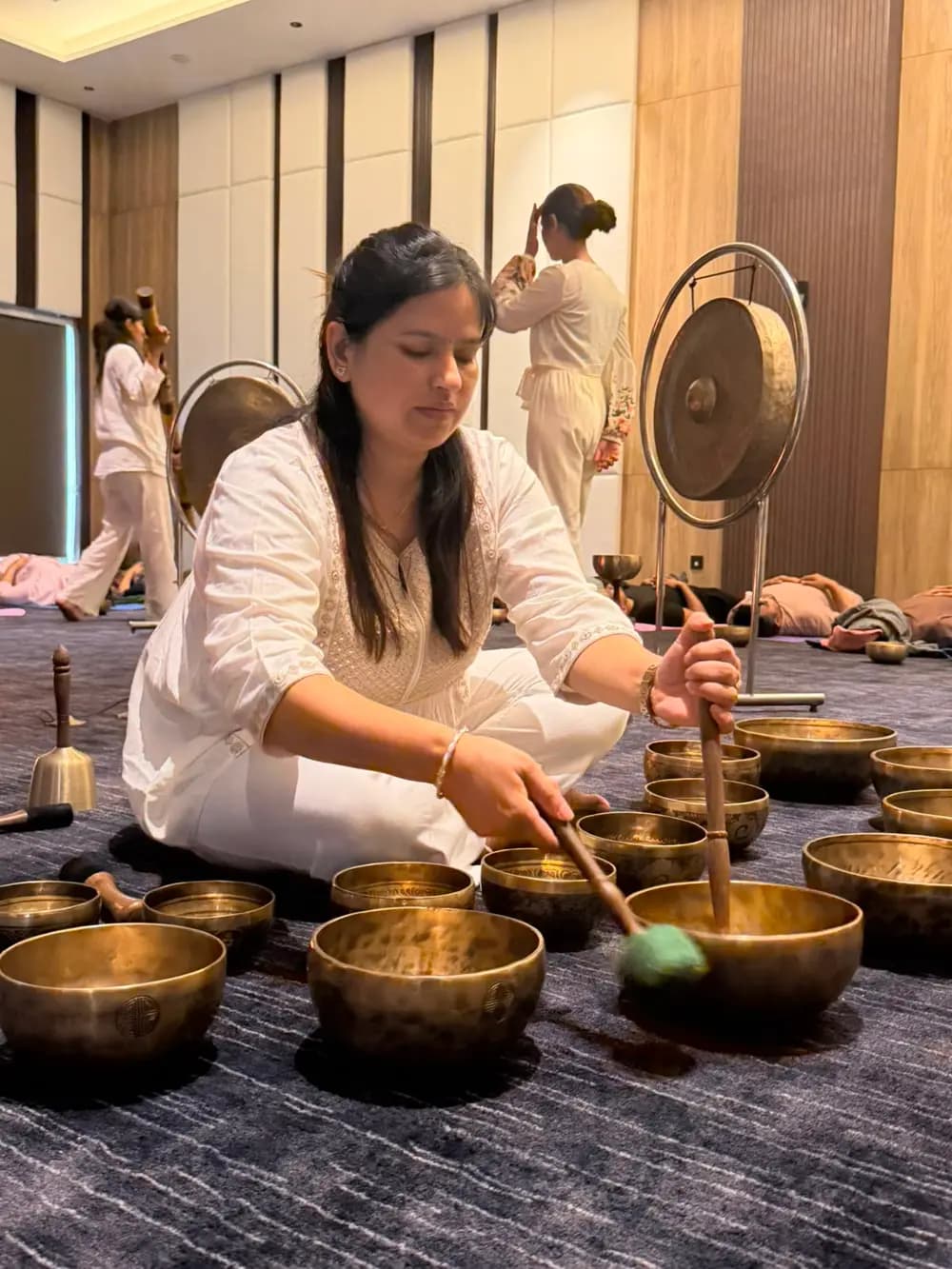
Yoga means union, but union of what? Most people meet yoga through the body. They arrive at a studio in Kathmandu, roll out a mat, and learn to breathe steadily through a forward fold. They are practising Hatha yoga — the path of the body. But Hatha is only one of the paths, and understanding the others makes sense of what the morning practice is actually building.
The types of yoga paths are often described as five: Hatha, Raja, Bhakti, Karma and Jnana. They are not different religions or rival styles. They are different doorways into the same work. Most of us approach yoga through one door and eventually walk through several, often without noticing we have changed rooms.
Hatha: the yoga of the body
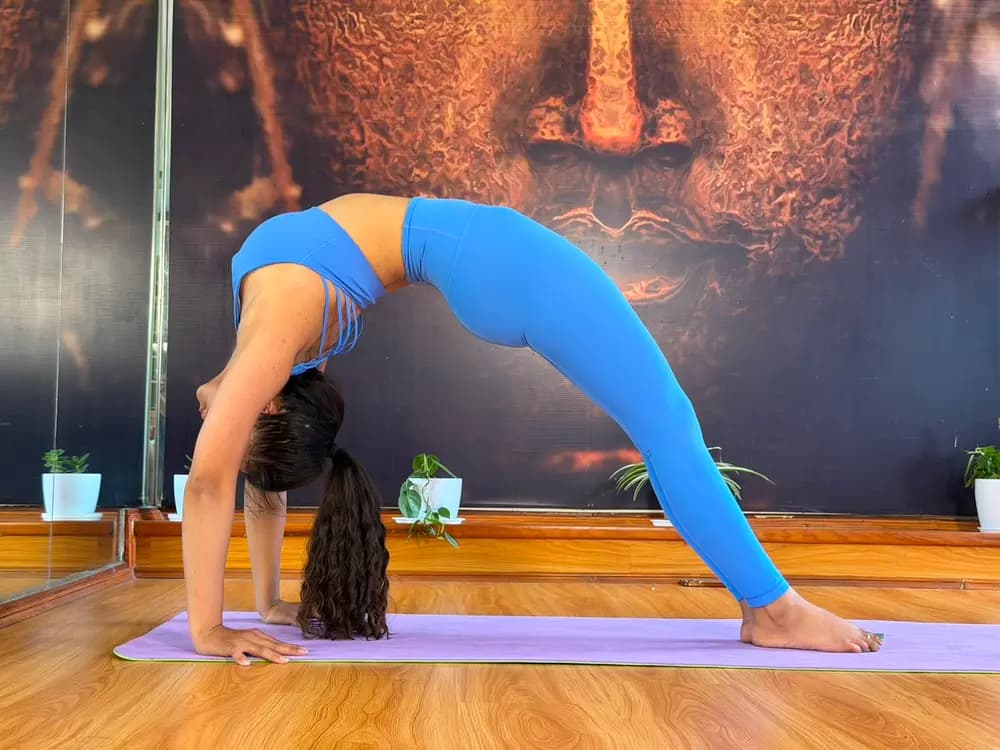
Hatha yoga is the physical practice. It is the postures, the breathing techniques, and the steady attention to where your body is in space. It is what you do when you join the 7 AM class on the timetable. It is also what half the world thinks yoga is, because it is the easiest to show someone.
Hatha works because the body listens. When you hold a challenging pose and breathe steadily, you are practising steadiness. You are learning to stay present with discomfort that is not damage. You are training your nervous system to stay calm under mild stress. These are not magical claims. They are what actually happens in muscle, bone and breath.
The strength and flexibility matter, but not for the reason people usually think. They matter because they make it possible to sit still. Once you can hold your body comfortably without bracing or struggling, attention becomes possible. Hatha is a preparation for everything else.
Raja: the yoga of the mind
Raja means royal, or the king's path. It is the yoga of meditation and mental discipline. If Hatha asks your body to be steady, Raja asks your mind to be steady — to watch your thoughts without being swept along by them.
Raja sounds abstract until you have tried it. You sit and watch your breath, and every few seconds your mind wanders to tomorrow's meeting or yesterday's conversation. You notice, and you gently return to the breath. Again and again. This is the actual practice. It is unglamorous and takes longer than most people want to spend.
But here is what matters: Hatha teaches your body how to sit in the stillness that Raja requires. You cannot meditate well when your knees ache or your back is twisted. The physical practice in the morning class clears the way. Many people find that after two years of Hatha and Ashtanga practice, meditation becomes possible in a way it was not before.
Bhakti: the yoga of the heart
Bhakti is devotion. It is the yoga of emotion and connection — to something larger than yourself, whether you call it nature, spirit, community or simply life. Where Hatha uses the body and Raja uses the mind, Bhakti uses the heart.