
Meditation in Kathmandu can begin in any quiet corner—your room before dawn, a chair by the window, or a mat at a meditation center. The city itself, ringed by mountains and prayer flags, holds a long tradition of practice. Yet for many people, the hardest part is not learning the technique; it is knowing where to start and how to return when life pulls you elsewhere. This guide covers both: the approaches available at Rising Lotus and how to build your own consistent practice.
Why establish a routine
The US National Center for Complementary and Integrative Health documents that even brief, regular sitting—ten or fifteen minutes daily—can reduce stress, improve focus and help with sleep more reliably than sporadic longer sessions. Consistency matters more than duration: a modest practice you actually keep outweighs ambitious intentions. Finding something small enough to survive your life makes all the difference.
Meditation classes in Kathmandu range from group sessions to private instruction. The style and setting matter less than showing up. Some people meditate in silence; others work with breath or sound. Some sit still; others move. The practice meets you where you are.
Sound meditation practice
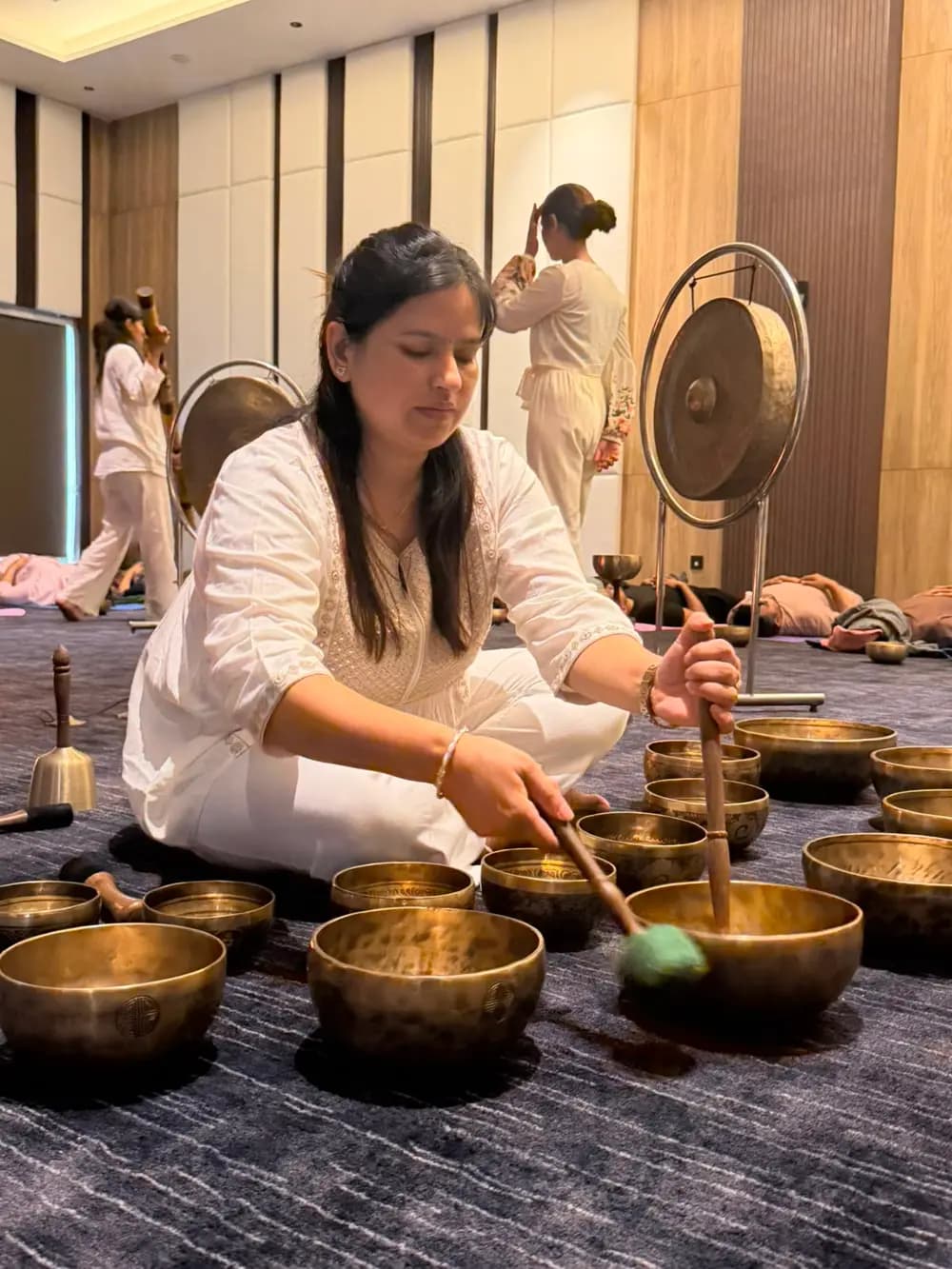
Rising Lotus offers several approaches to meditation. The Sound Bath is a group session where many people report that sound waves from singing bowls and gongs create deep relaxation—often called sound meditation. You arrive, lie down, and allow the vibrations to settle your mind. No experience is needed; many find it the gentlest entry point because the bowls do the work and your role is simply to receive.
The Chakra Activation with Seed Mantras combines sound meditation with chanted seed syllables, one for each chakra in the traditional map, as a way of giving the attention a sequence to follow. If you prefer a more structured practice with intention, this offers that. The Sound Meditation session itself is a dedicated space for conscious listening without the yoga movement that comes in other classes.
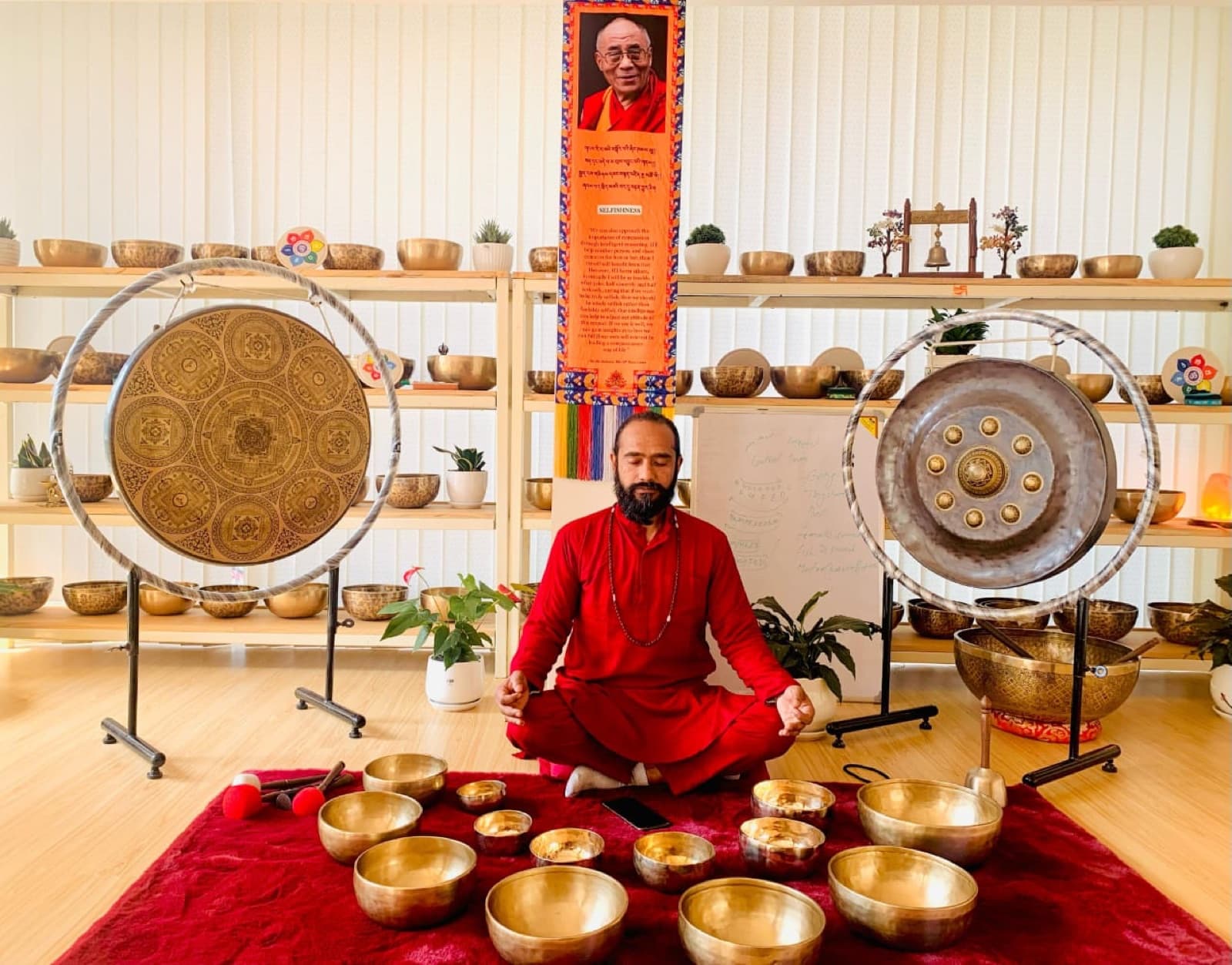
For those interested in formal training, the Sound Healing Level I course is a three-day course that starts from the instrument itself: how a bowl is made, how to strike and rim it, and how to listen. It gives you enough to build a simple sound meditation at home; our home practice guide is the ten-minute version.
Starting at home
You do not need to join a meditation center to begin. Consistency often builds when you return to the same place each morning: your bed before you rise, a chair by a window, or a corner of your room with a cushion. The key elements are simple.