
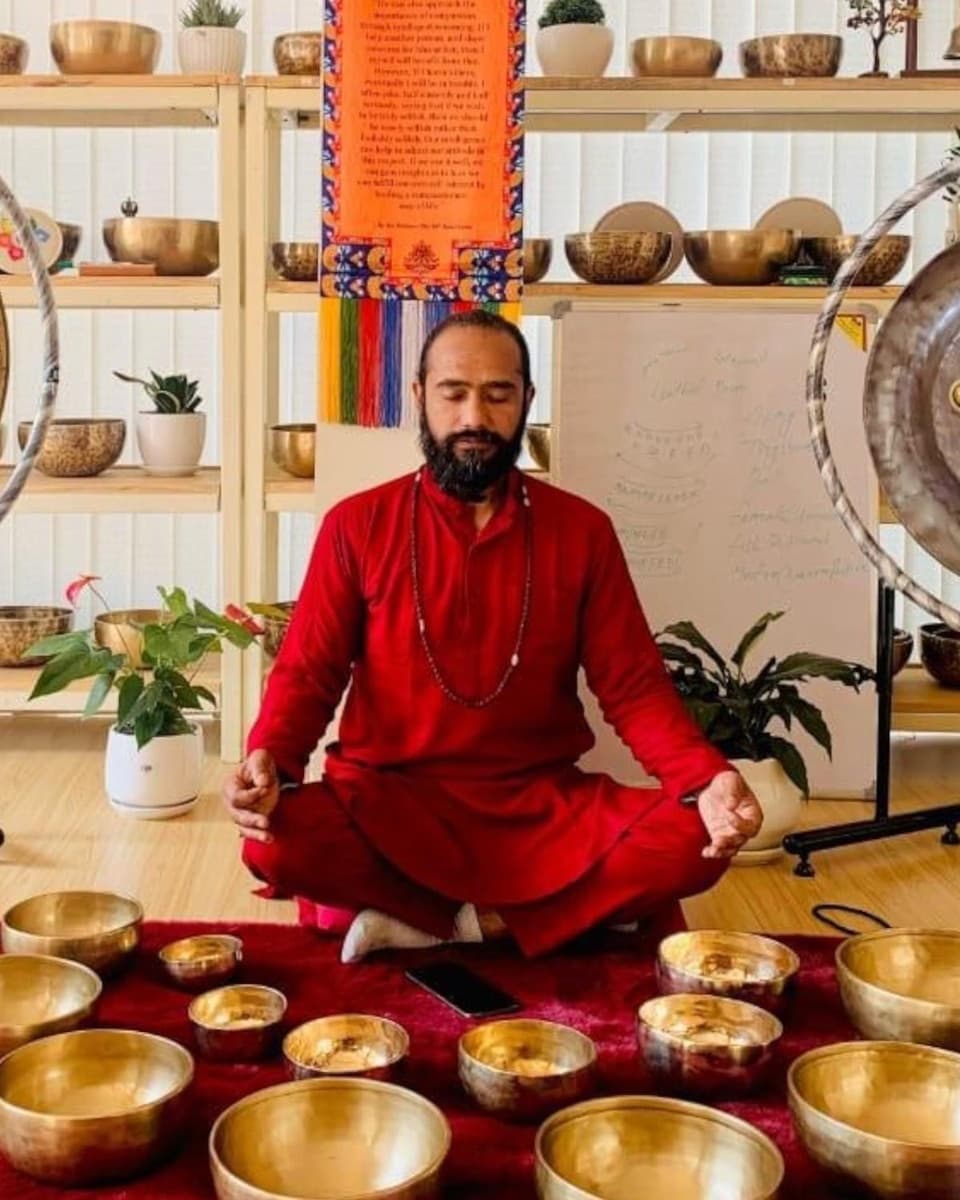
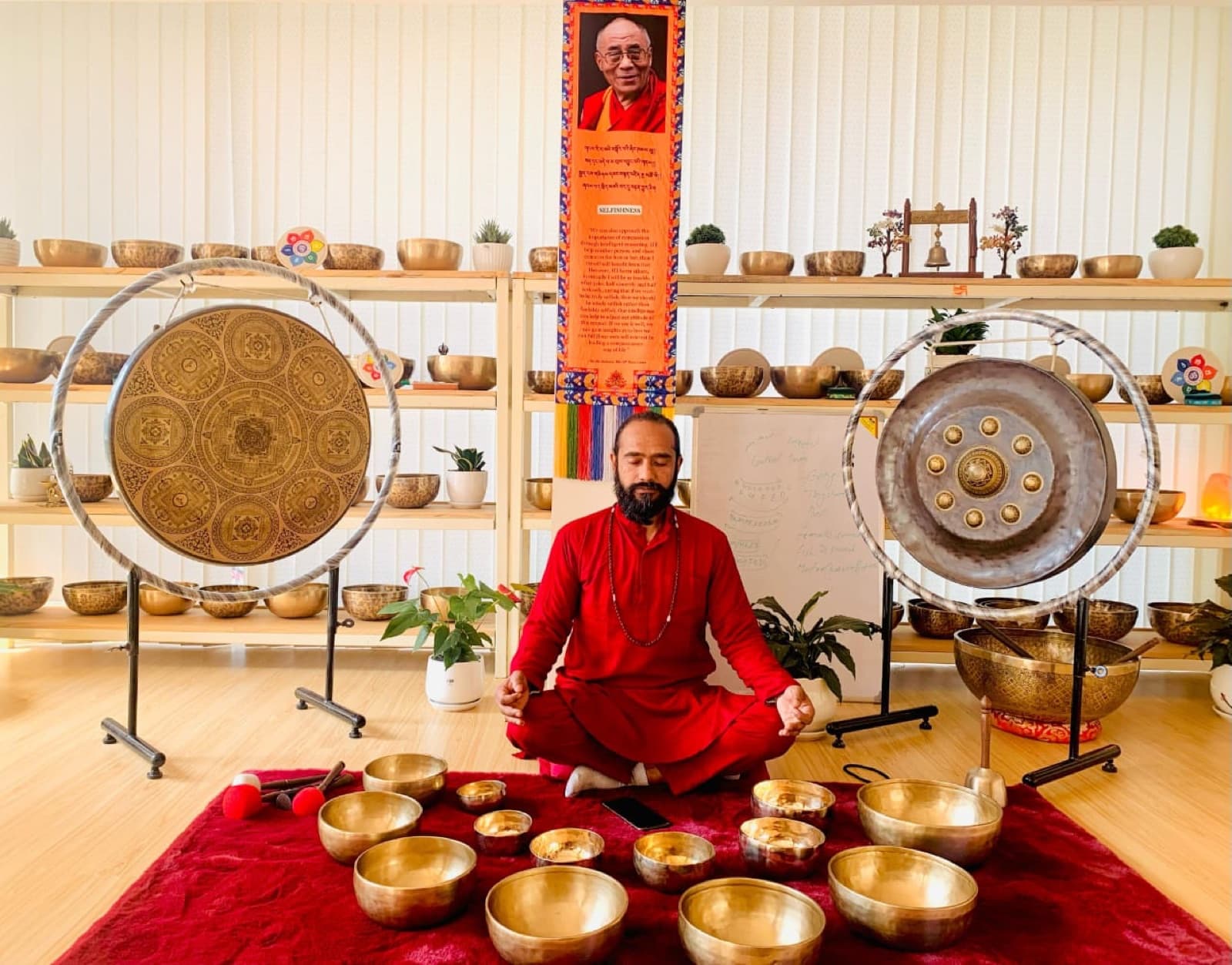
A sound bath is simpler than its name suggests. You lie down. The room fills with the sound of singing bowls, gongs and the human voice. Nothing else happens. Many people find the experience deeply settling, and it asks almost nothing of you except to be present and listen.
If you are thinking of coming to a sound bath in Kathmandu, here is what the session looks like from the moment you arrive.
Arriving for a sound bath Kathmandu session
Rising Lotus is a short walk from the Boudhanath stupa in Boudha. Arrive ten or fifteen minutes early to find the studio, remove your shoes, and settle in. The space is quiet and dimly lit, with cushions, blankets and mats arranged on the floor. Ask any questions before we start; there are no silly questions when you are somewhere new.
How you will rest
Once everyone has arrived, you will lie down on your back on a mat. A cushion supports your head, and blankets are there if you want them — many people do, as the body cools when you are still and quiet. Position yourself however feels comfortable; there is no correct way. Your eyes can be open or closed, though most people close them to attend to sound rather than sight.
What fills the room
The sound comes from singing bowls, gongs and sometimes the voice. A singing bowl is struck or rimmed with a mallet, and it produces a rich, complex tone. A gong, when played well, fills the entire room with sound so completely that you can almost feel it as much as hear it. If you want to know more about how singing bowls work, the guide to choosing your first singing bowl goes into detail.
The session unfolds without a script. The practitioner listens to the room and to how people are settling, and chooses which instruments to play and when. Sometimes there is silence between sounds. Sometimes the sounds overlap and layer. There is a gentle arc to it — a beginning, a middle and a close — but you do not need to think about structure. Your only job is to lie there and listen.
Many people notice that their attention settles quickly. The mind, which is usually busy with plans and memory, has one simple thing to rest on. Some people find this restful. Others find it strange at first. Both are normal.
How long does a session last
A typical sound bath lasts about an hour. The first few minutes are for settling — you are getting used to the space and the sounds. The middle twenty or thirty minutes is the deepest part, when the room and the sound and your attention are all aligned. The final minutes bring a gentle return. The practitioner will usually end with silence, and there might be a moment of quiet before anyone moves.
After the session, people sometimes need a few minutes before they stand. This is not unusual. You have been very still, and your body is adjusting. There is no rush.