
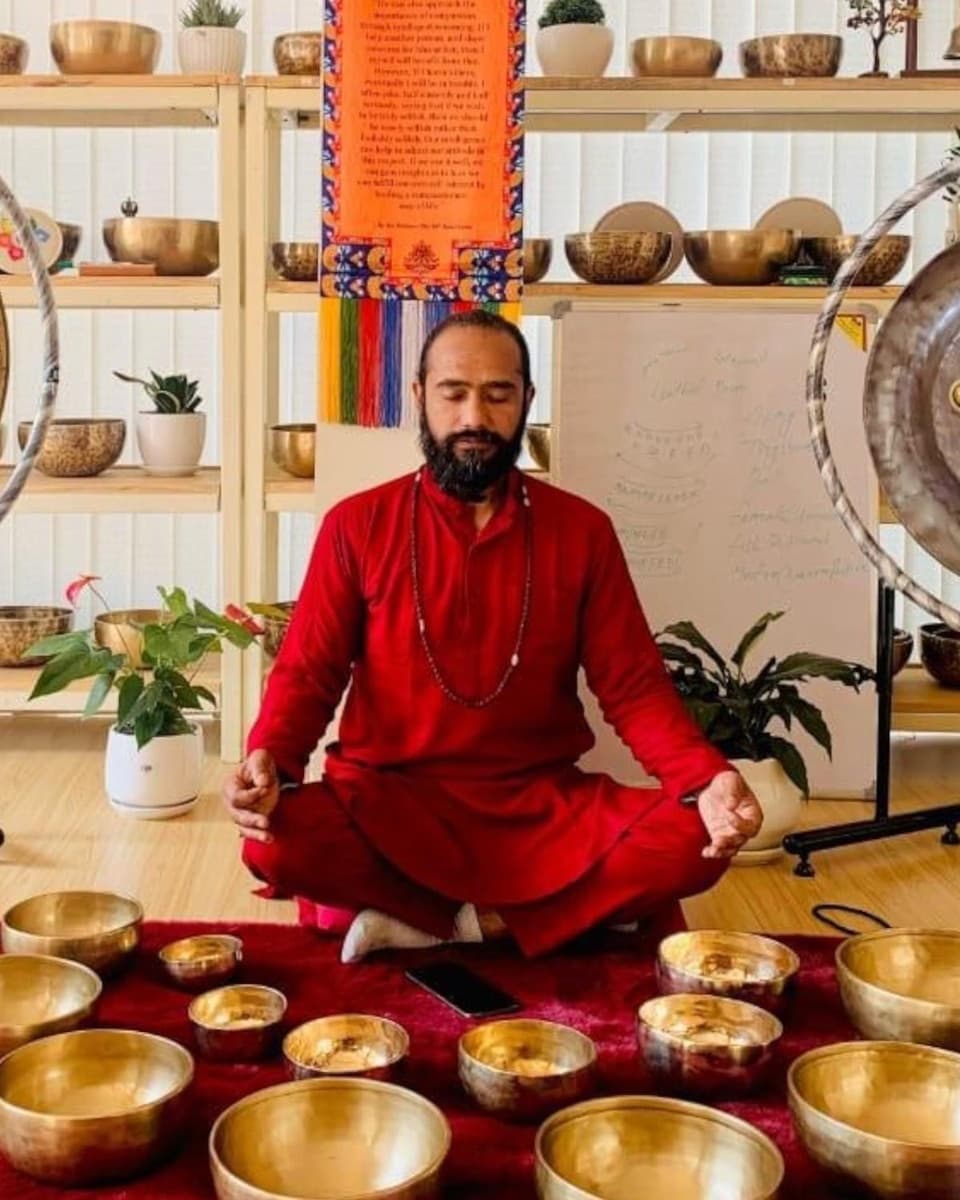
A seven-bowl chakra singing bowl set is one of the most widely misunderstood things in sound healing. People see a beautiful set, read that each bowl corresponds to an energy centre, and imagine that playing the bowls in order will somehow rebalance those centres. The idea is appealing. The reality is more interesting.
The seven-bowl chakra set is not a medical device, and it is not a treatment. It is a framework — a way of organising attention during a healing session, and a traditional map for thinking about the body as a system of practice. This article explains what that means and how the chakra activation work at Rising Lotus actually uses these bowls.
What is a chakra set?
A chakra singing bowl set consists of seven bowls, each hand-hammered and tuned to a different pitch. Each bowl is assigned to one of the seven chakras, the traditional energy centres in yogic and ayurvedic thought. The assignment is based on harmonic correspondence: the lowest bowl goes with the root chakra at the base of the spine, and the pitch rises as you move up through the energy system.
- Muladhara (root) — the lowest note, a deep red tone
- Svadhisthana (sacral) — orange
- Manipura (solar plexus) — yellow
- Anahata (heart) — green
- Vishuddha (throat) — blue
- Ajna (third eye) — indigo
- Sahasrara (crown) — the highest note, violet
This is a traditional correspondence, not a scientific claim. What matters is that you have a set of bowls that work together sonically — that when played in sequence or together, they create a coherent sound environment. The chakra set in our shop is tuned precisely for this reason.
The chakra system as a framework for attention
The chakra model comes from traditional yoga philosophy and has been used for centuries as a way of understanding the body and mind as an integrated system. In modern practice, it serves as something different: not a statement about physiology, but a map for where and how attention moves during a session.
When you work through the chakras in a healing session, you are not treating a disease or repairing a broken part. You are inviting the body and nervous system to notice different regions and shifts of sensation. You move attention from the base of the spine upward through the belly, the heart, the throat, and finally to the crown of the head. Many people find this kind of guided attention settling and centering.
This is not a modern invention. The chakra system has roots reaching back centuries in Vedic and tantric texts, and the practice of moving attention through the centres has been part of meditation traditions in South and East Asia for a long time. The publishes research on the effectiveness of complementary practices like sound healing and energy work, and their guidance is clear: these are complementary practices, useful for relaxation and well-being, and not a substitute for medical care when something is wrong.