
Singing bowls and gongs are the two instruments most people think of when they picture sound healing. Both are struck or rimmed to produce sound, both are rooted in Himalayan and Asian traditions, and both appear in the sound healing sessions at Rising Lotus. Yet they make very different sounds and sit in different places in a practice. Understanding the distinction between singing bowls vs gongs helps you choose which to use in your own session, or what to expect when you come to a sound bath.
How the two instruments are made and sound
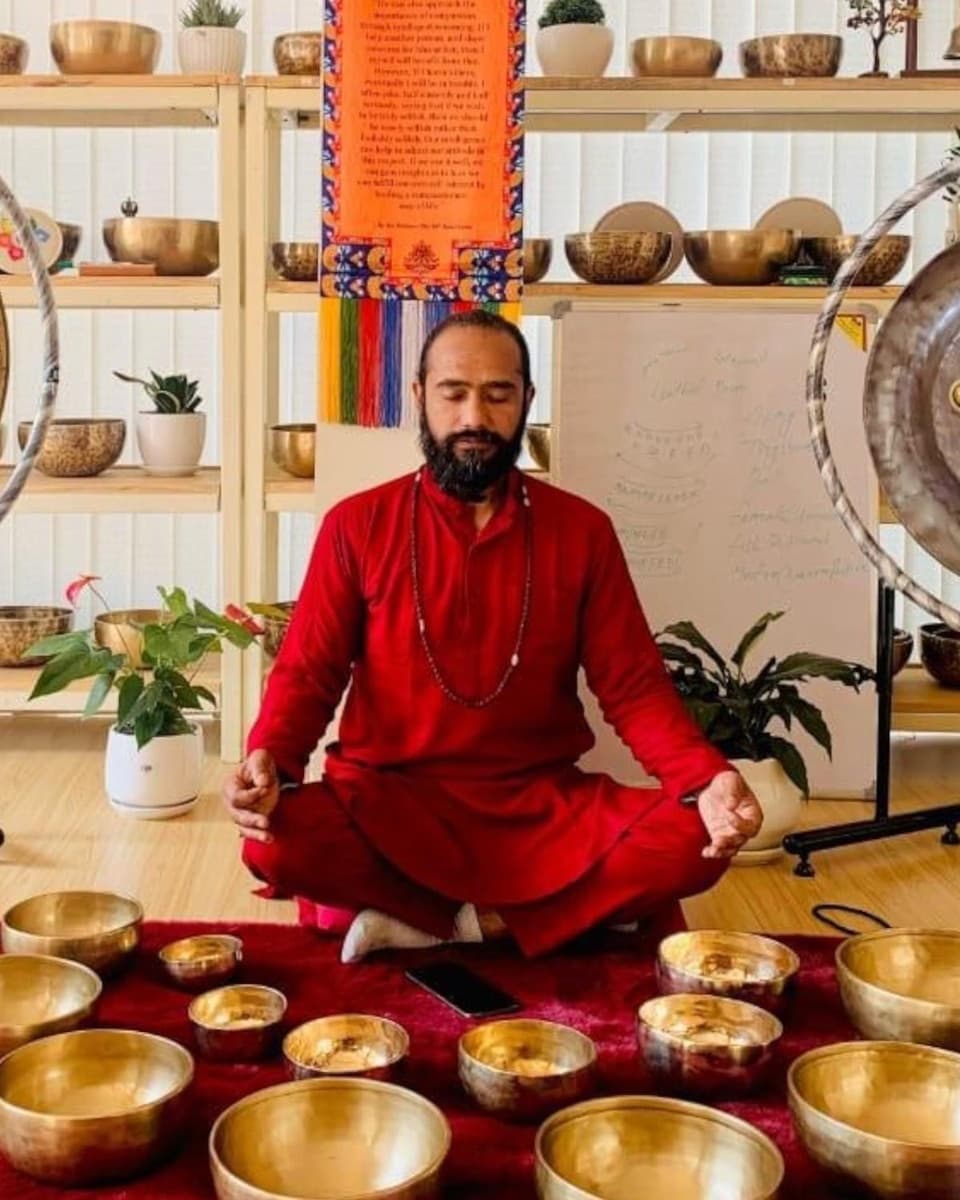
A singing bowl is usually made from metal — often a blend of up to twelve different metals — and shaped like a small cup. The walls are either hand-hammered to shape (which leaves them slightly uneven) or cast and spun smooth. When you strike a hand-hammered bowl, it produces several tones at once: a low hum at the bottom, a middle voice and a shimmer on the surface. When you rim it with a mallet, it sings as you circle the edge.
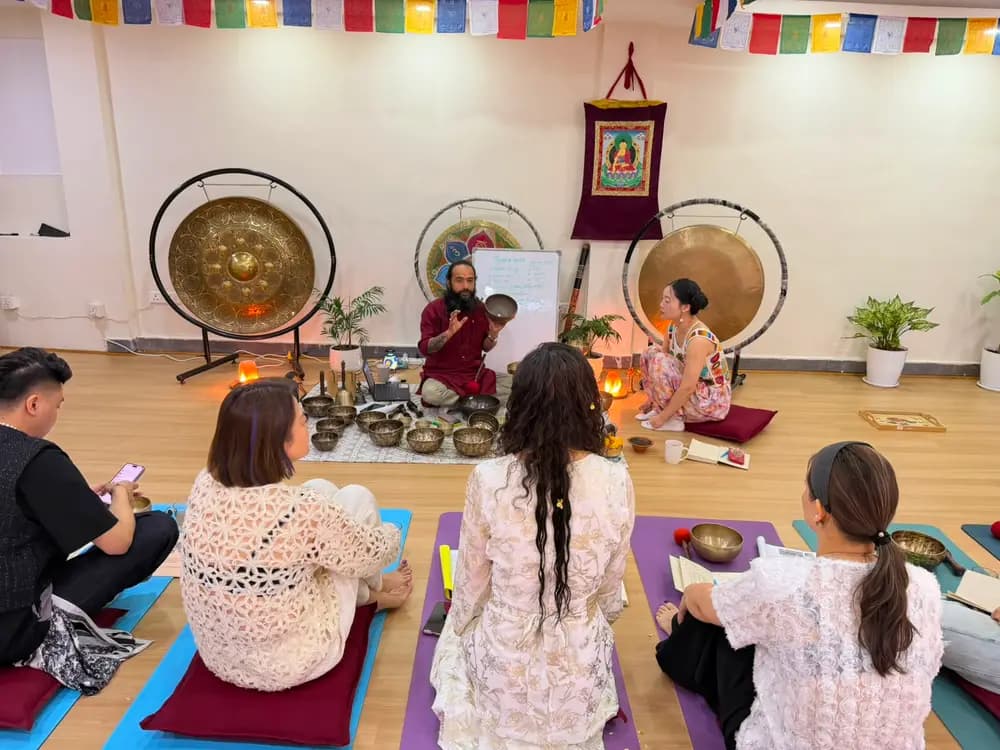
A gong is larger, usually made from brass or bronze, and hangs freely. The face is usually slightly convex. When struck, a gong produces a single, brilliant note that builds in intensity, then fades slowly. The sound carries further through a room than a bowl, and it is felt as much as heard — the vibration reaches into your chest and bones.
In terms of the singing bowls vs gongs sound quality, the bowl is complex and introspective, while the gong is single, powerful and immersive. A bowl draws your attention inward to listen carefully. A gong surrounds you.
Where each sits in a session
In a one-to-one session or a small group, a singing bowl often leads the practice. The facilitator plays it to open the space, perhaps rims it slowly as people settle, and rings it again to close. You listen from inside the sound, watching your breath. A session might use one bowl or several, perhaps a chakra set tuned to work together. The bowl is intimate and precise.
A gong typically appears in a larger group sound bath. The gong player strikes it with increasing force, building the energy in the room, then lets it fade away — often more than once in a session. The gong's sound envelops everyone at once. It is harder to ignore, and that can be part of the point: the sheer force of the sound is said to shift the nervous system in a way that smaller, quieter sounds cannot. Research on sound, meditation and relaxation practices is still developing; the US National Center for Complementary and Integrative Health has a careful summary of what is known about meditation and mindfulness practices more generally.
Some sessions use both. A facilitator might open with bowls to draw people inward, then introduce the gong to deepen the immersion or to shift energy. The contrast is deliberate.