
Many people come to sound healing because they carry stress they cannot set down, or because sleep has become difficult. Some have tried other things. Others have heard about the practice and want to understand what it is before they commit to an hour of their time. This is an honest guide to what sound healing offers, what it does not offer, and what the research says so far.
Why people seek sound healing
Stress and poor sleep are connected. A busy mind makes rest impossible. Days full of decisions, conversations and screens leave the nervous system active long after the body has stopped moving. At night this shows as lying awake, waking too early, or sleeping poorly even when the hours are there. During the day it shows as a low hum of tension that makes simple tasks harder.
This is common enough that it is worth taking seriously, and common enough that there is no single cure. Some people find help through a doctor or therapist. Some change when they exercise more, or eat differently, or spend time outdoors. Some find that practices like yoga or meditation shift something.
Sound healing for stress and sleep sits in this same space: a complementary practice, not a substitute for medical care, that many people find settles the nervous system.
What a sound healing session offers
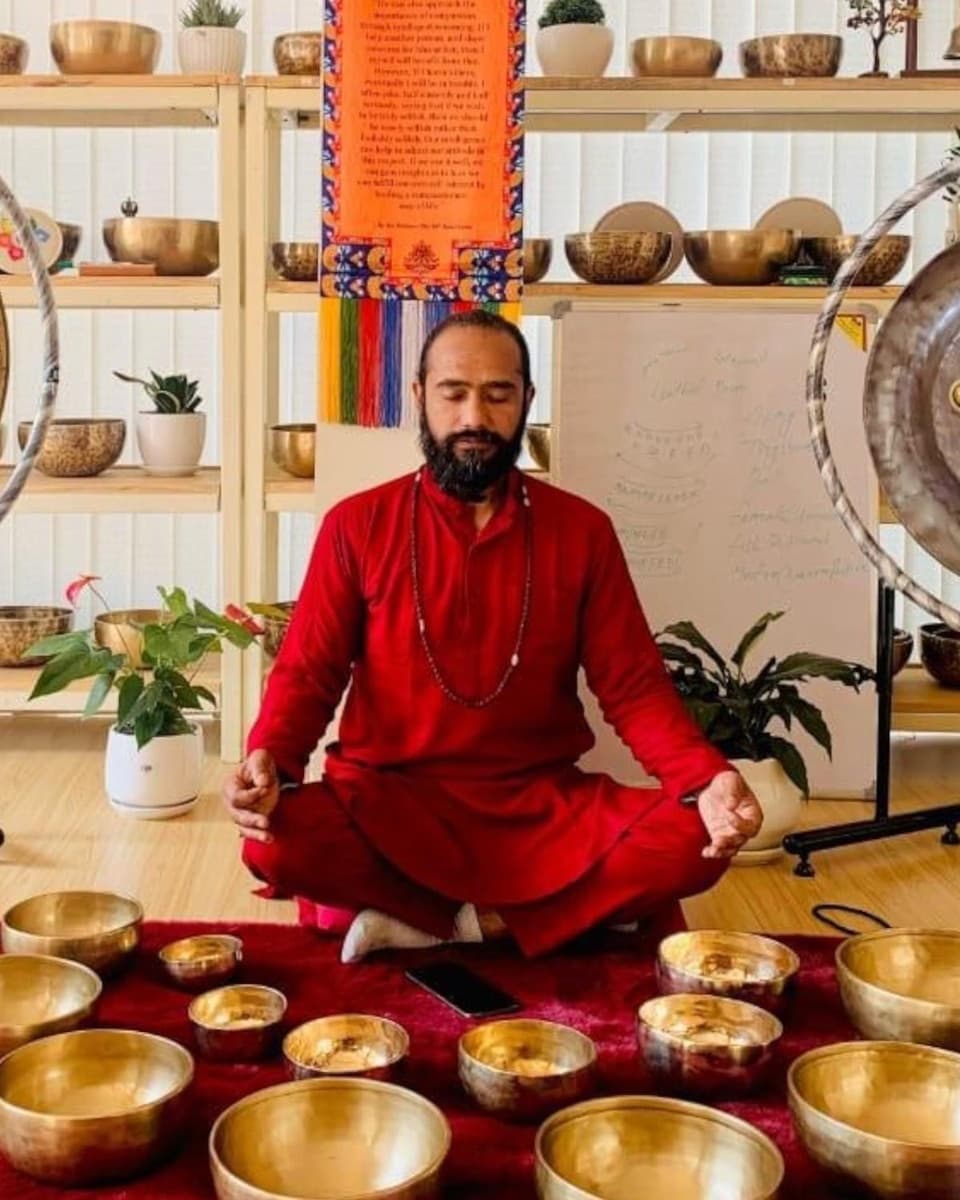
A sound healing session at Rising Lotus lasts an hour. You lie down, usually on a yoga mat or bolster, fully clothed and warm. The studio is quiet. A teacher plays singing bowls, gongs or other instruments around or over your body. There is nothing to do. No poses to hold, no breathing pattern to follow, no mantra to repeat. Your only job is to lie still and listen.
What happens in that hour is simpler than most people expect. The sound gives your attention one thing to rest on. Your mind, which has been divided among a hundred small concerns, can settle. Your body, which has been held tense, can release that tension because there is nothing else being asked of it.
People often describe a sound healing session as restful. Some fall asleep. Some find their thoughts slow down in a way they have not experienced in months. Some notice their shoulders drop, their jaw unclench, or their breathing deepen without any effort to make it happen. Many find that the rest they get in that hour is different from ordinary rest: deeper, more complete, harder to interrupt.
This is valuable whether or not it does anything else.
What the research says, and does not say
The science of meditation, relaxation and contemplative practices is still developing. The US National Center for Complementary and Integrative Health keeps a careful, readable summary of what is and is not known about meditation and mindfulness practices. Studies show that regular meditation and relaxation practices can help with general wellbeing, and some evidence suggests benefits for people with anxiety and sleep difficulties — but this is not the same as saying sound healing treats insomnia or anxiety disorders.