
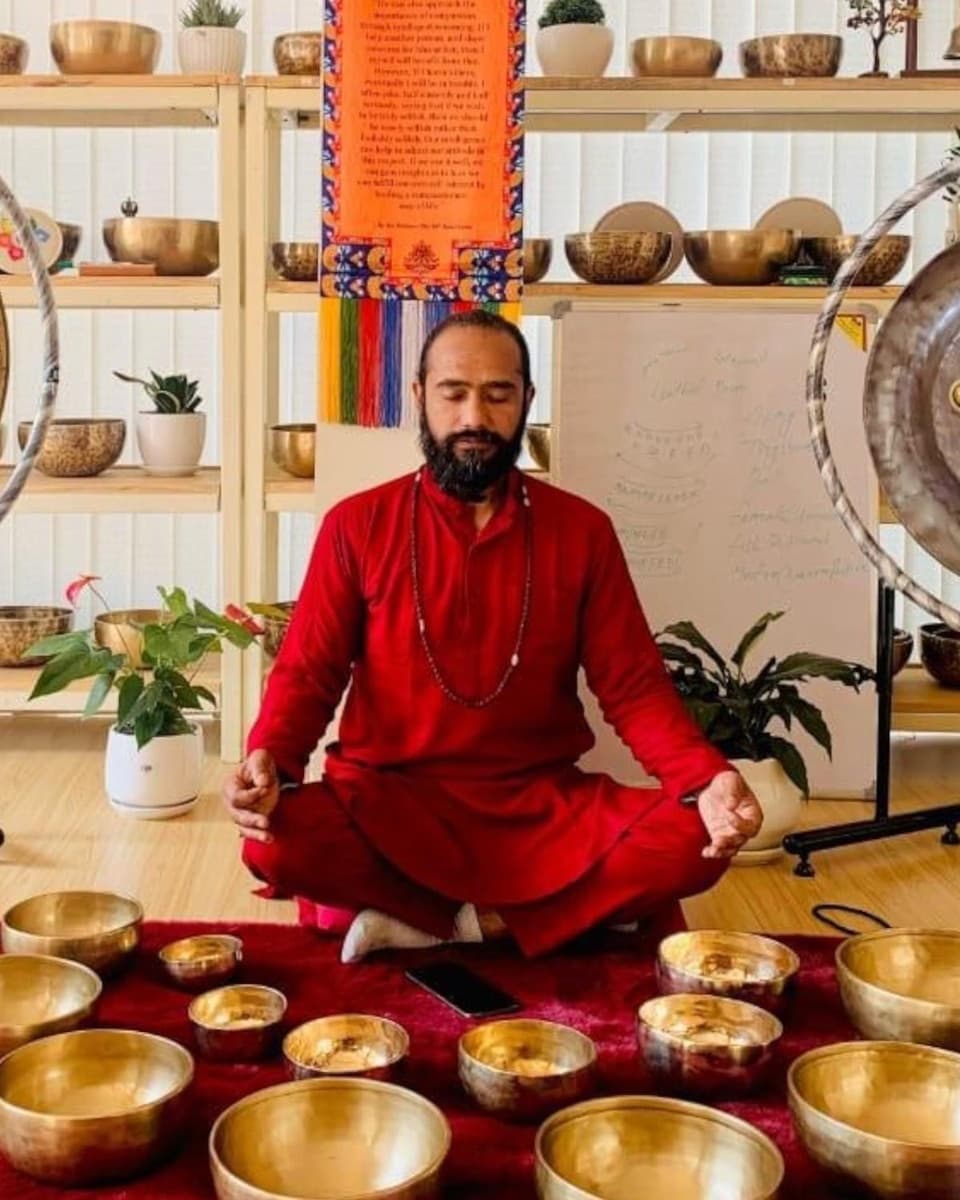

People arrive at sound healing training from two directions. Some have played a bowl at home for years and want to understand what they are doing. Others have never touched one and felt something in a sound bath they want to learn to give. Both ask the same first question: which level do I take?
The sound healing path at Rising Lotus has four stages. The dates, prices and full syllabus for each are on the courses page; this is a plain guide to what each stage is for.
Level I · Basic — three days
This is where everyone starts, including people who already own bowls.
A first level is about the instrument itself: how a bowl is made and why that shapes its voice, how to strike and how to rim without the mallet chattering, how to choose and care for a bowl, and how to play steadily for yourself. It is also about learning to listen, which is harder than it sounds and is most of the skill.
Take Level I if you want a personal practice, or if you are not yet sure you want to work with other people. Many students stop here, happily. If you are still choosing an instrument, read choosing your first singing bowl before you come.
Intermediate Therapy — four days
The step after a first level is working with another person rather than only yourself: using more than one bowl, pacing a session from beginning to close, and the practical side of holding a session that no one mentions until you need it.
Take it after Level I, once striking and rimming no longer need your attention.
Level II · Advanced — five days
An advanced level moves from technique towards judgement: longer sessions, larger sets of instruments, and the difference between playing for one person and playing for a room.
Take Level II when you intend to offer sessions to others, even informally.
Level III · Master — seven days
The longest course is for people who expect sound healing to become part of their working life, including teaching.
Part of working at that level is knowing the limits of the work. Sound healing is a complementary practice. It sits beside medical care and never in place of it, and a good practitioner says so plainly. The US National Center for Complementary and Integrative Health publishes a clear summary of what research does and does not show about meditation-based practices, and it is worth reading before you offer sessions to anyone.
How to choose
- Never played before? Level I. There is no shortcut, and you would not want one.
- Play at home and want to work with family or friends? Level I, then Intermediate.