

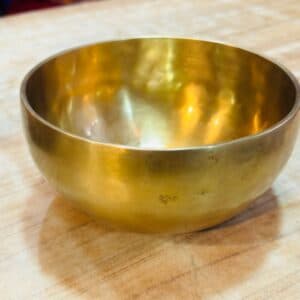
A singing bowl is an instrument, and its price reflects the method of making, metal quality, finishing care, and most importantly, how it sounds. If you understand these factors, you can judge whether a bowl is worth what is being asked for it.
Hand-hammered and machine-made are different trades
The largest cost factor is how the bowl was made.
A hand-hammered bowl is beaten into shape from a heated disc of metal — labour-intensive work that takes hours per bowl. The irregular walls produce a complex sound with multiple layered tones. These bowls are heavier, denser, and require more metal. A Fullmoon bowl or therapy bowl falls into this category. You pay more for skilled craft and better materials.
A machine-made bowl is cast or pressed in a mould, then finished by machine. One person oversees many bowls. They are lighter, thinner-walled, use less metal, and sound clear rather than complex. A machine-made bowl costs less because less time and material are involved. This does not make it inferior — it is simply a different tool for a different purpose.
A machine-made bowl suits a child, classroom, or beginner testing commitment. A hand-hammered bowl rewards consistent practice with decades of good sound.
Size carries weight and determines voice
Size matters. Larger bowls require more metal and labour, so they cost more. Size also changes the sound.
- Small bowls (10–14 cm) sing high, suit desk or personal practice, and are easy to hold and ring.
- Medium bowls (15–22 cm) have deeper voice and longer sustain. Most single-bowl buyers choose this size.
- Large bowls (25 cm and up) are low and slow, felt through the body, and require solid support and real strength to play well.
Price scales roughly with weight. A medium hand-hammered bowl costs about half again what a small one does; a large one costs roughly twice the medium.
The finish adds cost and character
A plain polished bowl costs less than one with carved design. Mantras or chakra symbols cost more, reflecting additional labour. A chakra set or mantra bowl shows this. Finish also affects play: smooth bowls are easier on mallet and fingers, while carved finishes may catch slightly. It is a matter of preference, not quality.
Tone quality and complexity cost more
Hand-hammered bowls produce several tones because of wall irregularities. Careful hammering creates richer layering of sound. Bowls with three or four distinct layered notes cost more because they require skilled craftspeople. The tone sustains longer and stays musical as it fades.