
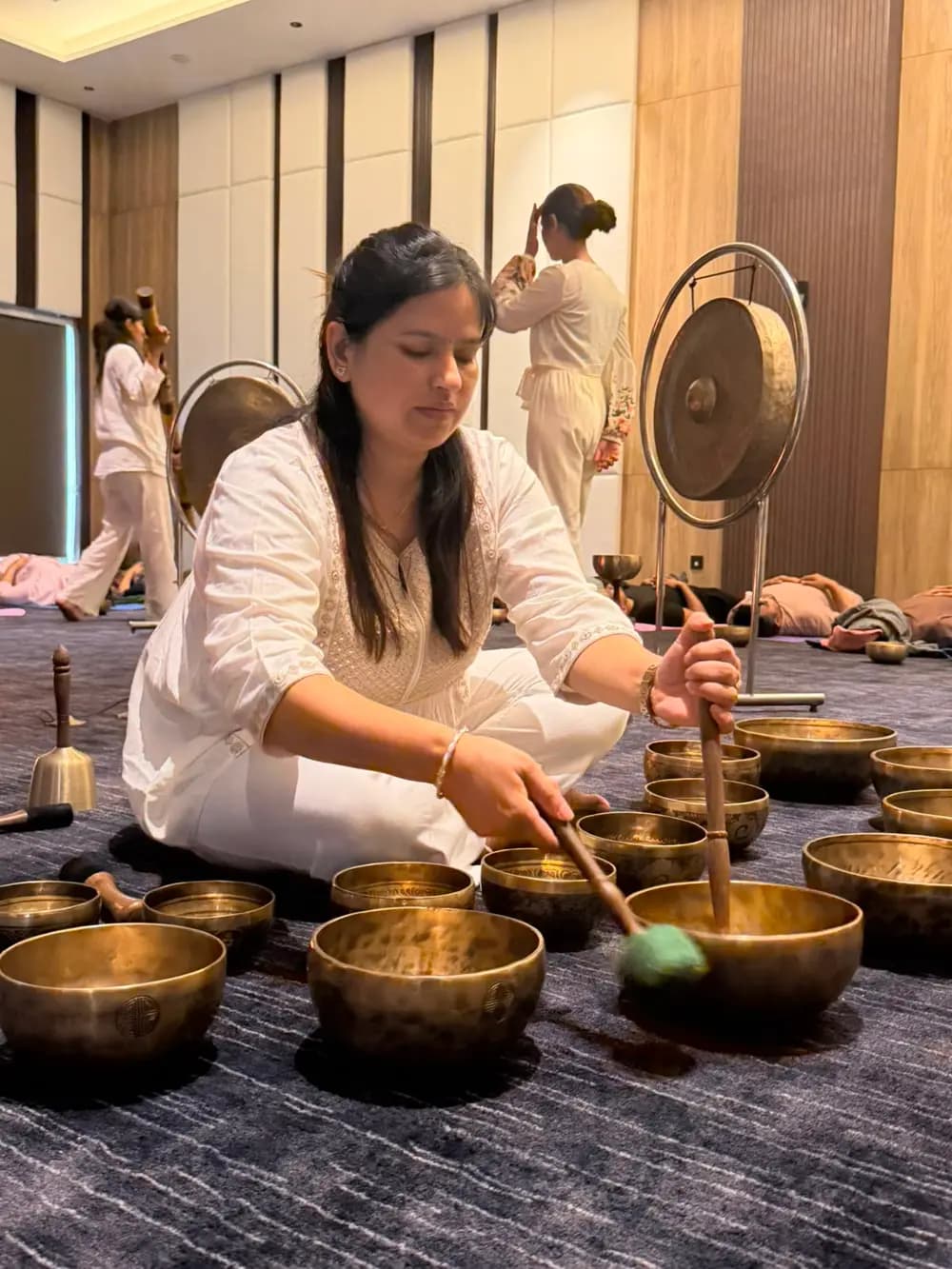
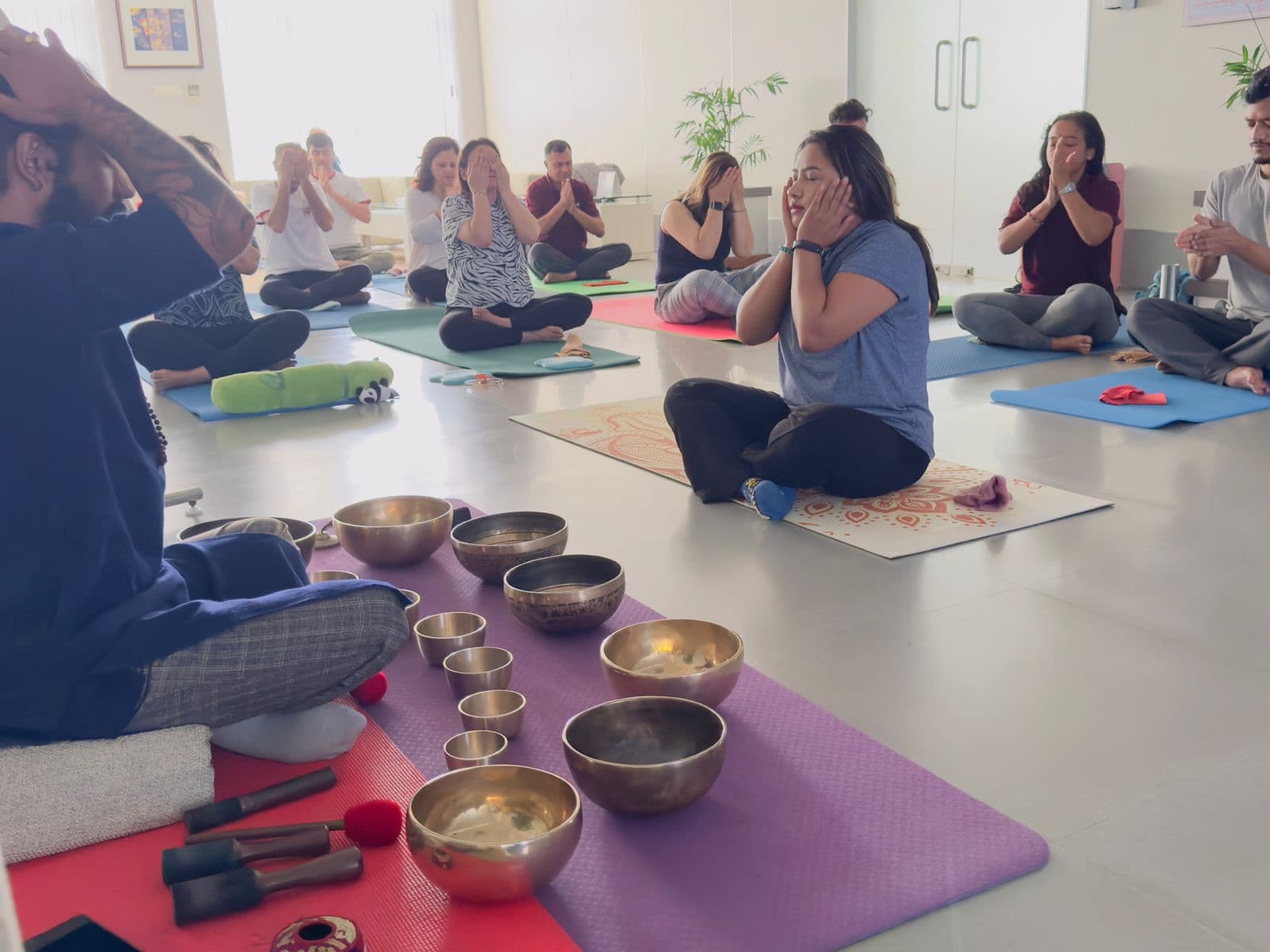
More offices and teams in Kathmandu are asking about corporate yoga and sound healing. A morning class before the working day starts, or a sound bath after a deadline. The reasons are practical: regular movement improves focus and reduces the physical strain of sitting, and many people find that a settled practice improves how they think and collaborate. Here is what a corporate yoga session looks like, how to arrange one, and what to expect.
What corporate yoga and sound healing actually means
At Rising Lotus, the corporate yoga offering has two shapes.
A morning session for the team — usually 45 minutes to an hour, in your office or at the studio. The instructor meets the level of the group (almost always beginners), and the class asks no prior experience: everyone starts where they are. Hatha or Ashtanga styles work well for groups, with a teacher who can offer easier alternatives for anyone recovering from an injury or simply moving slowly that morning.
A sound healing session — a sound bath, usually 30 to 45 minutes, where a team sits or lies down in a room and listens whilst singing bowls, bells and other instruments play. Sound baths do not ask anything of you. You simply listen. This works especially well after a long stretch of focused work, or as part of a retreat day.
The corporate yoga and sound healing service on the studio's healing page gives an overview. To talk through what would work for your team and your space, contact the studio and describe what you have in mind.
Why a morning class in Kathmandu makes sense
There are practical reasons why early practice survives the week, even when it is not the plan. The World Health Organization notes that regular physical activity reduces the risk of several chronic conditions and improves mental health — and regular means the activity you actually keep doing, not the ambitious plan you postpone.
An office class at seven or seven-thirty, before the day's meetings and interruptions gather, means the movement happens. If you wait until five in the afternoon, something else will fill that hour. A modest class that everyone attends is more valuable than an ambitious one that two people manage before a crisis moves the time.
For the body, the morning is also the right moment. Sitting at a desk for hours shortens the hip flexors, tightens the shoulders and hardens the lower back. Yoga addresses all three, but it works better when the body is cool and the spine is less compressed from the day's sitting. An early class relieves what sitting does.
For the mind, a quieter start makes a difference. By afternoon most people are carrying the day: the messages, the decisions, the conversation that went sideways. The keeps expanding, but the practical observation is simple: most people move better and think more clearly when they have not yet filled their attention with the day's load.